
How To Switch From Retail to Hospital Pharmacy
This post may contain affiliate links. For more info, please click here.
A version of this post was originally published on GoodRx.
For more writing samples, please visit my Muck Rack portfolio.
Key takeaways
With high burnout rates among community pharmacists, some of these pharmacists are thinking about transitioning to other settings — like hospital pharmacy.
When changing from a retail environment to a hospital setting, community pharmacists might experience many barriers.
Although the switch to hospital pharmacy can be difficult, there are ways to position yourself as a desirable candidate.
Many community pharmacists experience burnout. Even before the COVID-19 pandemic, burnout rates varied from 65% to 84% — with a positive correlation to prescription volume. With higher prescription demand during the COVID-19 outbreak, these burnout rates could be higher. Also, having a drive-through might worsen burnout rates.
With a large number of retail pharmacists experiencing burnout, many are looking to change pharmacy settings. In fact, some community pharmacists are interested in switching into a more clinical role — like hospital pharmacy, but are unsure if the change is possible.
In this article, we’ll discuss barriers to switching from retail to hospital pharmacy and how to overcome these obstacles.
Barriers to the switch
When changing from a retail environment to a hospital setting, many community pharmacists experience the following difficulties:

Competition: The pharmacy job market is very saturated. However, the availability of hospital pharmacist opportunities continues to be less than community openings. In fact, the U.S. Bureau of Labor Statistics (BLS) estimates that inpatient pharmacist positions will hold steady between 2016 and 2026 at 25% — while retail positions will also remain unchanged at 60%. Since hospital opportunities are consistently less available than community openings, there is additional competition for hospital roles.
Residency: To make matters more difficult for retail pharmacists, hospital pharmacy settings tend to require residency. However, many community pharmacists don’t have residency training.
Board certifications: If you don’t have residency training, then hospital pharmacies will typically ask for board certifications.
Clinical experience: Hospital settings will also want you to have clinical experience. Although many pharmacists use their clinical knowledge to dispense medications, some hospitals might place more emphasis on clinical experience during patient care services — like reviewing labs, making recommendations to healthcare providers, working at an anticoagulation clinic, counseling patients, and more. According to a 2019 Pharmacy Workforce Center (PWC) national pharmacist workforce report, however, full-time retail pharmacists only spend about 12% of their time on patient care services — compared to 37% for full-time inpatient pharmacists.
Internal candidates: Some hospitals also prefer to hire internal candidates, who started out as pharmacy technicians, students, or residents. If you received a referral from a current employee, however, you might be treated similarly to an internal candidate.
Overcoming the barriers
Due to a number of obstacles, transitioning from a retail pharmacy to a hospital setting can be difficult. Let’s discuss how to overcome these barriers.
Apply for less competitive shifts
Although there are less hospital openings than community positions, there is typically less competition for unpopular hospital shifts — like the as-needed (PRN), graveyard, weekend, and holiday shifts. Consider applying for these undesirable shifts to get your foot in the door. Once you obtain a hospital pharmacist position, more desirable shifts might open up within 3 to 4 months of your start date. Then, you can discuss with your manager about transitioning to a more desirable schedule.
If working odd hours is impossible with your schedule, let’s discuss other potential options to help you transition into a hospital setting.
Residency training
Since many hospital pharmacist positions prefer residency training, pursuing residency is an option. However, this path will result in a pay cut for 1 to 2 years — For example, John Hopkins provides a stipend of $50,130 and $52,740 for year 1 and 2 of residency, respectively. So, the lower pay may not be a feasible choice for everyone. It is possible to become an inpatient pharmacist without residency. We’ll discuss how to do this next.
Board certification
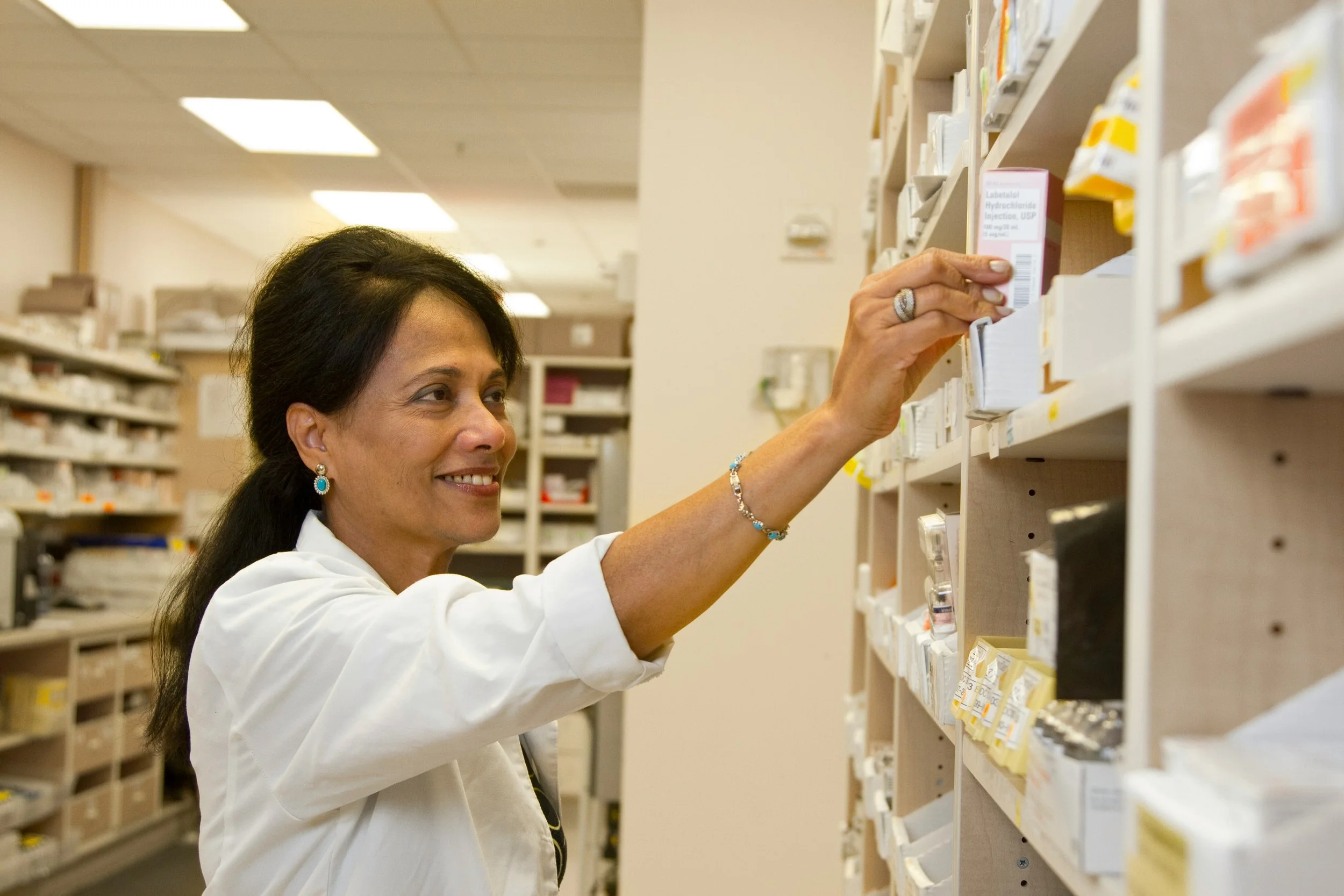
Many hospital pharmacists tend to have at least one board certification after their residency training, but you do not need to have residency training to sit for a board exam and obtain certification. Based on the eligibility requirements for many of the board exams, however, residency training will save you some time. Without residency training, you will need to have the minimum amount of experience to sit for the exam. Some board exams will require at least 4 years of applicable experience.
These certifications show your commitment to staying up-to-date and your dedication to providing high-quality patient care. Many hospital settings see a board certification as equivalent to residency training. If you are interested in receiving a new board certification, how do you get more clinical experience to be eligible for the exam? We’ll discuss this next.
Clinical experience
As stated earlier, hospital pharmacies usually expect you to have clinical experience, which is also a typical requirement for a board certification. Although the community pharmacy environment can be very hectic and you may already be stretched thin in your schedule, consider some of the following ways to get more clinical experience.
Assisted living facilities (ALF): Build rapport with local ALFs and offer to assist them with medication fulfillment needs for their residents. If they agree, then you may gain some experience with helping older adults in a long-term care (LTC) setting.
Collaborative practice agreements (CPAs): If you have great rapport with nearby doctors, leverage these relationships. These doctors already trust you. So, consider asking them to trust you with more responsibilities — like reviewing patients’ medical history, performing encounter visits for specific disease states, ordering certain labs, and optimizing drug therapy.
Education classes for diabetes or other medical conditions: Find out common medical conditions in your patient population. Then, consider offering a class about these disease states on a monthly basis to help patients reach their health goals.
Health screening and point-of-care (POC) testing: Host occasional health screening events and provide various POC tests, such as A1c, glucose levels, cholesterol levels, strep tests, and more.
Insurance and formulary management tasks: Consider providing insurance clinics to help older adults find the best Medicare Part D plan — based on their medications and preferences for premiums, deductibles, and copays. Also, pay attention to insurance reimbursement rates for certain medications and stay up-to-date with clinical guidelines to better manage the formulary or inventory.
Medication therapy management (MTM) services: Have set times and dates to have appointments for MTM services.
Regional or district tasks: Ask your managers about regional tasks or projects that will help you focus on addressing your skill gaps. You can also ask for a change in title, which might look nice on your resume.
Vaccine clinics: Coordinate with local employers and ALFs to set up vaccine clinics and increase the immunization rates within the community.
By being involved in these projects, you’re positioning yourself as an ambulatory care pharmacist with a focus on clinical care and enhanced pharmacy services. Also, you’ll broaden your skill set to include specializing in specific disease states and developing some familiarity to LTC and formulary management tasks.
Internal candidate treatment
As previously mentioned, transitioning into a hospital setting can be difficult — especially if some hospitals tend to hire internal candidates. So, how do you receive similar treatment as internal candidates?
Networking can help. In fact, networking is the shortcut that might help you become a hospital pharmacist without residency or board certifications. After you know which hospitals you like, consider networking with inpatient pharmacists and directors of pharmacy at these hospitals. These pharmacists might invite you to apply to hidden jobs, invite you for interviews, and introduce you to helpful connections.
The bottom line
With high burnout rates among community pharmacists, some pharmacists are thinking about a change in settings — like hospital pharmacy. Although switching to a hospital setting can be difficult, it is possible.
ABOUT THE AUTHOR:
You know how barriers may sometimes prevent people from meeting their goals? If you have any barriers that are making it difficult to reach your goals, there is a way to overcome these obstacles with personalized consultations and services tailored to your unique needs.
Ross is the founder of Off Script Consults, an award-winning pharmacist consulting business. She has years of experience practicing pharmacy in various settings, which she uses to help colleagues by offering career coaching and business consulting sessions. As a board cerified clinical pharmacist, she also provides personalized health consultations. Ross further uses her skills as a medical writer and reviewer with a focus on digital health publications and medical communications. Refer to the About page for more disclosure information.
To book a discovery meeting, please use her calendar link.
If you find this post helpful, consider buying me a coffee. Your support makes it possible to access insights and wellness resources, as well as clinician and business content, without additional costs.
